
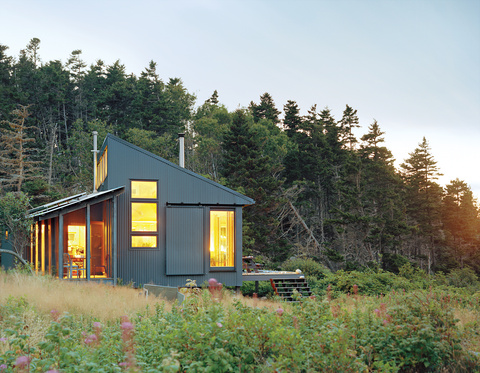
Finding a serene, peaceful plot of land is a nature-lovers dream. But building on such a site could be a challenge depending on location. I’ve given this some thought of my own; wouldn’t it be great to live in the forest? Finding a field among the Sequoia’s or a flat-ish plot of land high on some hill top. But wait….where would I get my electricity from? How could I have hot, running water or a toilet for that matter?
[dropshadowbox align=”none” effect=”lifted-both” width=”auto” height=”” background_color=”#ffffff” border_width=”1″ border_color=”#dddddd” ]If you’re interested in building your own tiny house like this one instead of going prefab, tiny house plans might just be the ticket.[/dropshadowbox]
I came across an article in Dwell that sort of answers those questions. Bruce Porter, a retired professor and writer, purchased a plot of land on the sparsely inhabited Criehaven Island four decades ago. Though he toyed with the idea of building a get-away place of his own, it wasn’t until the ’90’s that he got serious about this idea. You can read the story in Dwell here, but the most interesting points to me in regards to solving living/comfort issues on a remote build site are the following:
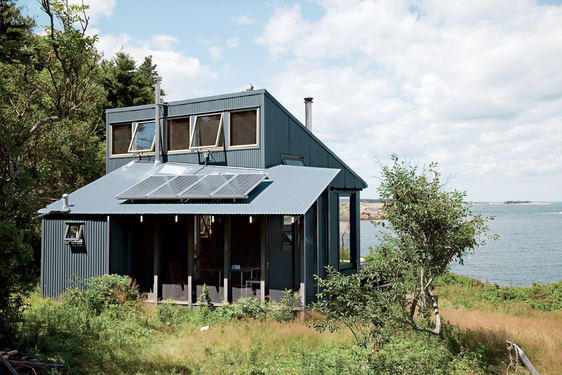
- A remote island off the coast of Maine, Criehaven inhabitants (mostly summer only) can’t have septic tanks – and based on the article I’m also guessing there’s no sewage system either. Any remote location might face a similar problem – but you still need a facility for human waste. Solution: composting toilet.
- Irregular build sites are hard to reach. Forget driving a truck up to your build site – you either haul in your supplies by foot or small gas-powered motor. Porter hauled much of his supplies by tractor-mower. Solution: Be prepared and be efficient.
- No electricity at the build site means you’re doing much of the work by hand. Or by generator*. Solution: Your materials should be pre-cut to the size you need and easy to assemble with a hammer and nails.
- Unless you’re going to be living by candlelight, you need power. A generator* is an option, but you’ll need to refuel it every so often. In Porter’s case, he wasn’t thrilled with the idea of lugging fuel by foot to his home. Solution: Solar power or alternative power options.
- Without plumbing, you need to find alternatives to fresh water. In the Porter cabin, they use a cistern that catches rain water and cleans it through a roof washer. This might not work in more arid conditions, which could pose a problem. Solutions: cistern or well (this would require a permit and may not be possible in all situations).
Though these solutions cover only a few difficulties with building in a remote area, they open up some real possibilities to building a get-away cabin in the woods (forest, island, etc.) that is sparsely inhabited.
Would you like a get-away cabin in the woods? How would you solve these possible issues?


3 Comments
The Dwell article is about more than an unusual building site. It’s about being smart and sustainable.
As we prepare to move aboard a sailboat, we face the exact same issues and some of the same solutions (yes, they do make composting heads for boats).
@Pamela – I can imagine this is very similar to moving onto a sailboat. And actually, that sounds very adventurous! Any small space with limited access to indoor plumbing could benefit from the solutions the Porter cabin came up with.
3.5