
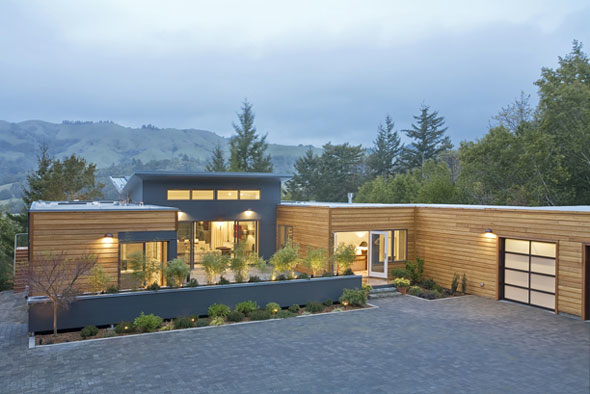
I’m always on the hunt for new prefab home ideas. I enjoy searching for new designs, eco-friendly options, and alternative housing options that cost less than buying an existing home. This makes sense since my goal is to be a homeowner within 5 years and I’d like to stay within a very meager budget. But one thing I’ve noticed in my research when it comes to the total cost of a prefab, from start to finish, is that they aren’t always the cheapest path to owning a home.
Take Michelle Kaufman homes, for example. Her prefab home designs are exquisite – but they are anything but inexpensive or frugal. Most of her designs start in the high $300,000’s range, but that price buys you well thought-out floor plans, environmentally friendly materials, and good design.
I realized in my quest to save money on a house, that more than just the price of the kit comes into play; obviously the land where you build your home costs money, but besides that, many times the preparation of the land can run in the tens of thousands of dollars or more. I learned this from Alchemy Architects when researching their weeHouse design. They have an excellent calculator that breaks down the costs of almost everything; the land, prefab design, land preparation, contractor fee, financing, post-delivery fee, and the move-in to name just a few (ha, ha, ha!) expenses.
Case in point: A story in the New York Times reminded me that building your own prefab entails much more than the low sticker price on the kit home. To summarize Zoe Bissell’s and Bryan Buryk’s path to home ownership, they built a Rocio Romero LVL prefab home on land Zoe inherited. Originally wanting to stay under a total of $160,000, they ended up $100,000 over budget! Ouch. Now the article eludes to a possible a cost analysis error on the contractors side, but the LVL home sounds like it needed a lot more than just nails and a hammer to make it a home.
Thinking off the top of my head, I’m predicting that any kit home would need the following:
- Dry wall
- flooring
- appliances
- plumbing
- electrical
- insulation
- windows
- doors
- window dressings
- A/C and heat – or ventilation
I’m not going to include furniture since any new home would need that, but it’s easy to see how a perceived “inexpensive” home can balloon up to about the same or more than an existing home.
Final thoughts: As much as I enjoy researching prefab kit options, crunching the numbers is imperative before making a commitment!


